

Most finance teams barely see mobility as a risk area. Most think of mobility as reimbursements, payroll adjustments, or small recurring vendor invoices. The numbers look manageable, the spend spreads out, and HR, operations, and payroll often share responsibility.This perception is precisely what makes manual mobility management so risky.
Often, finance teams can tell you how much they spent on mobility last quarter. Fewer people can explain where the money went or how confident they are in the accuracy of those numbers.
The result of manual mobility management is financial blind spots. Errors are not caught in time, and overspending only becomes apparent after the fact. Compliance depends on explanations rather than on system controls, and over time, these gaps quietly undermine financial accountability.
This article tackles mobility from a finance perspective. Specifically, it shows how manual processes introduce hidden financial risk in mobility. It also looks at how fragmented mobility data limits oversight, and how centralisation and automation help you restore control.
This isn't about introducing new technology. Instead, it's about improving financial governance in an area finance teams can no longer ignore.
Reimbursement errors accumulate faster than finance teams expect #
Mobility reimbursements are often where the financial risk for finance teams becomes visible, but only once something goes wrong.
Think of a manual setup where employees submit expenses late or with insufficient information. Mileage entries rely on estimates, and eligibility rules reside in policy documents rather than in systems. Now, finance must pause to verify amounts, check compliance and correct mistakes before payroll runs.
Manual validation around reimbursements creates a critical problem. Rushed or incomplete checks allow overpayments to slip through, while underpayments trigger corrections, payroll adjustments, and frustrated employees. As a result, finance works with numbers that change after reporting has already taken place.
What makes this setup particularly risky is that these errors rarely show as large, isolated incidents. They build up quietly across hundreds of reimbursements. On their own, they seem minor, but together, they skew mobility cost visibility and weaken the data that finance relies on.
Manual mobility reimbursements may also compromise internal controls. When validations happen after submission, or perhaps worse, after payment, finance loses the ability to prevent errors. Control shifts from the system to the individual. Consequently, consistency depends on who happens to review the data.
In this environment, finance teams don't manage mobility spend control; they react to it. And by the time errors surface, the money has moved.

Mobility budget tracking happens after the money is gone #
Manual mobility management not only distorts individual reimbursements, but it also weakens mobility budget control.
In many organisations, finance teams track mobility budgets after the fact. This means updating spreadsheets monthly or quarterly, pulling data from payroll, expense tools, and vendor invoices. By the time they see the whole picture, the spending has already happened.
As such, budget tracking turns into a reporting exercise rather than a control mechanism.
Without a real-time view into forecasted versus actual spend, finance cannot step in early. Overspending only becomes visible at the end of the month or year, and then the options to correct no longer exist.
From a finance perspective, this is critical because overspending becomes visible too late and forecasts rely on estimates instead of real data. Finance spends time explaining variances instead of avoiding them, and responsibility for staying within budget becomes unclear.
When teams manage mobility budgets manually, finance doesn't guide spending. It explains results after the fact, which further weakens effective mobility spend control.
Fragmented mobility data undermines financial control #
One of the main reasons teams struggle to control mobility financially is that the data itself remains fragmented.
Mobility spend rarely sits in one place. Instead, mobility spend data exists across payroll, reimbursement tools, mobility cards, leasing providers, public transport subscriptions, and vendor platforms. Finance teams then bring together all these sources manually to make the numbers match. Such work doesn't add insight, it creates a temporary version of the truth only used for reporting.
Fragmented mobility data undermines financial oversight and mobility cost visibility in three ways:
- Accurate numbers arrive too late
- Reports no longer match
- Data becomes harder to trust
When finance reconstructs mobility spend after the fact, control moves from systems to spreadsheets. Audit trails rely on manual explanations rather than evidence, increasing mobility compliance risk and weakening financial oversight.
A centralised mobility data view changes this dynamic. When all mobility-related spend and usage data live in one place, finance gains a single source of truth. Figures remain consistent across reports because they come from the same data source, not because finance corrected them later.
Manual mobility management increases compliance and audit risk #
Manual mobility management seriously impacts cost control but also increases mobility compliance risk.
In a fragmented setup, finance teams often struggle to produce complete audit trails. Approvals live in inboxes. Policy rules apply inconsistently across systems, and supporting documentation arrives too late.
When auditors ask questions, teams have to reconstruct explanations manually instead of relying on solid system records. This reactive approach makes audits time-consuming. What's more, it weakens confidence in reported numbers and shifts compliance away from predefined processes toward individual knowledge.
In practice, manual mobility management forces finance to defend decisions after the fact. Automated, centralised processes change that by integrating controls upfront and allowing finance to show compliance through traceable data instead of explanations.
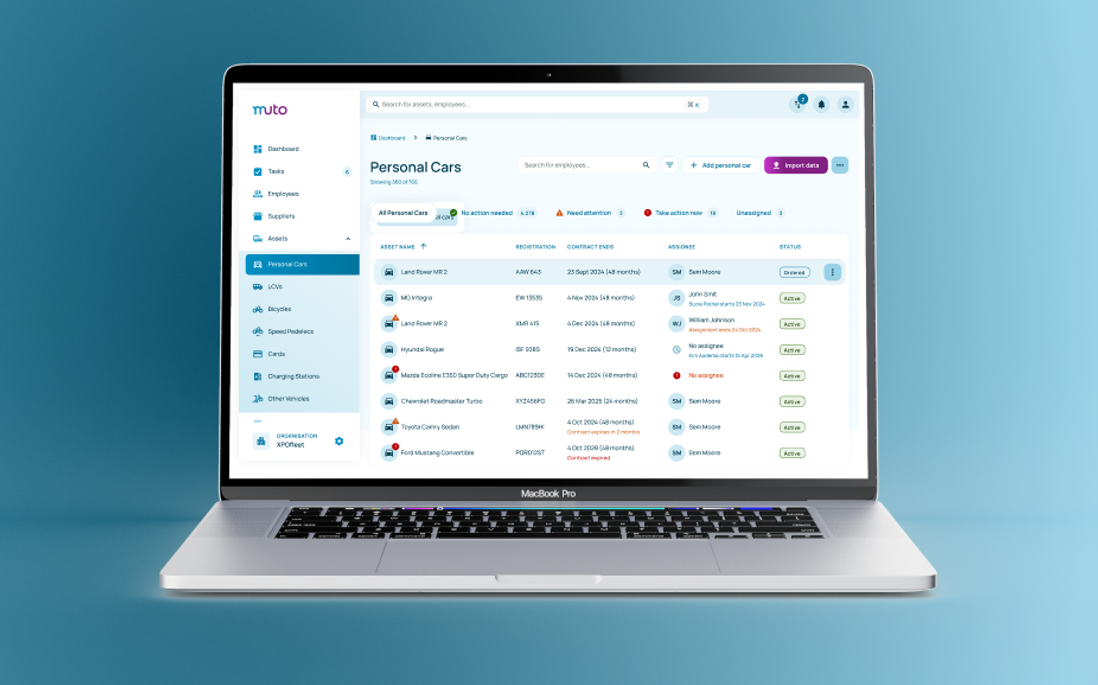
Why automation starts with centralisation #
In a previous article, we outlined six mobility tasks organisations can automate to reduce administrative workload. Such tasks range from mileage validation to budget tracking. Across all of them, one requirement kept returning: mobility data needs to live in one place.
That requirement becomes even more critical from a finance perspective.
Automation on its own doesn't solve financial risk when mobility data is scattered across vendors, payroll, emails, and spreadsheets. In that setup, automation only speeds up processing time. It does not improve accuracy, visibility, or control.
Finance benefits from automation only when it comes from a consistent data foundation. Centralising mobility operations brings together usage, cost, and policy data into a single view. Like this, systems apply the same rules before money moves, and not after.
With centralised mobility data, finance can put controls in place where they matter most. For instance, validations happen before processing payments. Rules apply consistently across all mobility spend and budgets reflect approved and pending costs, not just past expenses. Lastly, audit trails are available automatically instead of being recreated at the last minute.
Centralising mobility data restore financial discipline to an area that often sits outside traditional control structures.
When finance teams work from centralised, validated mobility data, automation becomes a financial governance mechanism. It prevents errors, enforces policies, and improves visibility without increasing manual workload.
Conclusion #
The biggest mobility cost is often the one that never appears on a line item. It surfaces as delayed visibility, shifting numbers, and decisions made without reliable data.
Manual mobility management creates financial blind spots. Errors become visible too late, budgets drift without early warning, and teams rely on explanations instead of control. Over time, this crumbles the confidence in the numbers that finance must stand behind.
That is why financial governance in mobility can no longer remain optional.
Finance teams must demand accurate reporting, predictable cost development and clear visibility into upcoming mobility spend. Achieving this does not require a technology overhaul. Instead, it requires centralised mobility data, consistent rules, and processes that prevent errors.
Once these foundations are in place, automation enforces discipline and restores oversight, rather than simply speeding up transactions.
Manual mobility management is not just an operational issue. It's a financial risk that demands stronger governance, better data, and earlier control.


