

Employee mobility is changing fast. Hybrid work, sustainability expectations, and electrification have completely changed how people move. At the same time, rising expectations and stricter budgets make cost control and compliance more difficult.
These shifts require a clear mobility strategy for 2026. Mobility moves from logistics to a strategic benefit that influences talent attraction, productivity, employer branding, budgets, and ESG performance.
Employers thinking ahead, especially those in Belgium and the Netherlands, are already refining mobility policies. That means they can enter 2026 with systems and mobility offers that work for everyone. They know mobility needs vary. They also understand that mobility data and automation are the only ways to achieve clarity.
Mobility is about experience. And when companies make it easier for their people to move, they make it easier for them to succeed. In this guide, we break down the top three mobility priorities for 2026 to help you create strong programs for the year ahead.

#1 One size is over: make it personal #
For decades, mobility policies were built around one assumption: everyone drives to the office. Most commonly, employees would get a company car and a fuel card. Companies wouldn't consider the employee's lifestyle, commute or role.
However, real life has shifted, and not everyone needs or wants a car anymore. Employees living in the city might rely on public transport or cycling. Someone who comes to the office twice a week doesn't need the same mobility solution as someone travelling from far.
As such, mobility needs have become as diverse as your workforce. Expectations take shape based on where employees live, how they work, and what they value.
Mobility is a talent win, not just a vehicle #
Mobility impacts daily life and is much more than a benefit on paper. The reality is: a strict car-only mobility policy can become a reason for someone to choose another employer.
A personalised mobility policy sends a strong message to candidates:
- "As a company, we support your lifestyle"
- "We want mobility to be easy for you"
- "We trust that you'll choose what works best for you"
Such personalised mobility is essential in a talent market where flexibility is a high priority for professionals.
Mobility budgets enable true choice #
Making mobility personal and flexible doesn't mean chaos; it means choice with clear boundaries. Mobility budgets are the source of that choice. Instead of locking benefits to specific modes of transport, employees can now choose how they move with multimodal mobility options.
In Belgium, more employees are already replacing cars for mobility budgets each year. The main drivers of this shift are changing expectations and new regulations that encourage companies to offer alternatives to company cars.
Personal mobility with structure #
Choice works best with clear, structured mobility rules. One way to structure flexibility is through:
- Clear eligibility categories (role-based budgets or car options).
- Ability to combine mobility modes (EV, bike leasing or public transport).
- Simple communication that explains mobility options.
- Easy digital tools to manage choice and expenses (see our latest series on TCO of the mobility budget).
- Regular reviews to make sure the mobility policies remain relevant and fair.
The most effective organisations offer modular mobility options that give employees room to choose what suits them.
Quick wins you can implement today #
Minor changes to mobility management will already go a long way and ensure you're one step ahead for 2026. Here are a few simple steps to start moving toward a more personalised mobility policy:
- Identify mobility needs by location, role and commuting patterns.
- Offer choice-based mobility (car, budget, multimodal options).
- Communicate clearly so employees understand how to use their mobility benefits.
- Position mobility as a core employee benefit in recruitment and internal communication.
- Track usage, costs, and satisfaction to guide future improvements.

#2 Flexibility and compliance are the new operating system #
Hybrid work has permanently changed the way people commute. Fewer employees travel to the office daily, and working from different locations has become the norm. At the same time, regulations around company cars, EVs, mobility budgets and charging are tightening.
This mix of flexibility and compliance pressure needs a new model. This model should adapt to different usage patterns, ensure fairness among employees and secure fiscal compliance.
Flexible mobility without financial surprises #
More employee choice doesn't equal losing control. Instead, it means redesigning mobility policies so they remain transparent, structured and easy to manage. That starts with defining who is eligible for which options. Budget boundaries should be visible and predictable to give employees the freedom to choose within the limits set by finance.
Further, automated checks can ensure rules are applied consistently without increasing administrative workload. This way, flexibility is backed by clarity and fairness.
One policy, shared ownership #
Mobility sits at the intersection of HR, finance, fleet and legal. When these teams work in parallel rather than together, mobility becomes slow and complicated.
To avoid this, companies should adopt a unified mobility policy. Such a policy should be in a shared digital system, like the Muto platform. The goal is to ensure everyone has the same understanding of how mobility works within the company.
Make compliance a positive experience #
Compliance has a direct impact on how employees feel about their benefits.
When EV drivers know their home-charging costs are reimbursed correctly, they feel more confident. When hybrid workers understand when allowances apply, they feel secure. When the rules are clear and fair, mobility becomes less confusing. It becomes something people can trust, and trust leads to higher satisfaction and stronger adoption.
Why the timing matters #
Regulatory changes, effective from 2026, make the transition urgent. Employers offering company cars will need to provide an alternative mobility budget as well. And for most employers, electric vehicles will become the default in any compliant car policy.
Such a shift requires updated policies, clear communication, and tools to handle new cost types, especially charging. Reliable ESG and tax reporting is another critical element. Therefore, don't wait until the deadline and last-minute pressure hits. Instead, minor updates today can help you stay ahead of the coming changes.
Quick wins to stay flexible and compliant #
- Align HR, finance, fleet and legal under one mobility policy
- Update car policies to reflect the EV fleet transition
- Define guidelines for hybrid workers: when and where do allowances apply
- Automate charging reimbursements to reduce administrative work
- Review compliance regularly to stay ahead of regulatory changes
The next step is gaining complete visibility through mobility data and automation. This is a key foundation for smarter mobility decisions in 2026 and the years ahead.

#3 Data and automation turn mobility chaos into strategy #
As mobility becomes more flexible, data scatters across systems and commuting patterns become less predictable. Without the right tools, this leads to unclear costs, fragmented information and unnecessary manual work.
This is why 2026 will be the year when data and automation separate reactive programs from strategic ones. The companies that can see their mobility data clearly will be the ones able to optimise it.
Visibility is everything #
Most organisations still keep mobility information across different HR and leasing systems and spreadsheets. As a result, teams struggle to answer essential questions such as: "How much are we spending?" or "Which mobility options do employees actually use?"
Without visibility, there's no other way but guesswork.
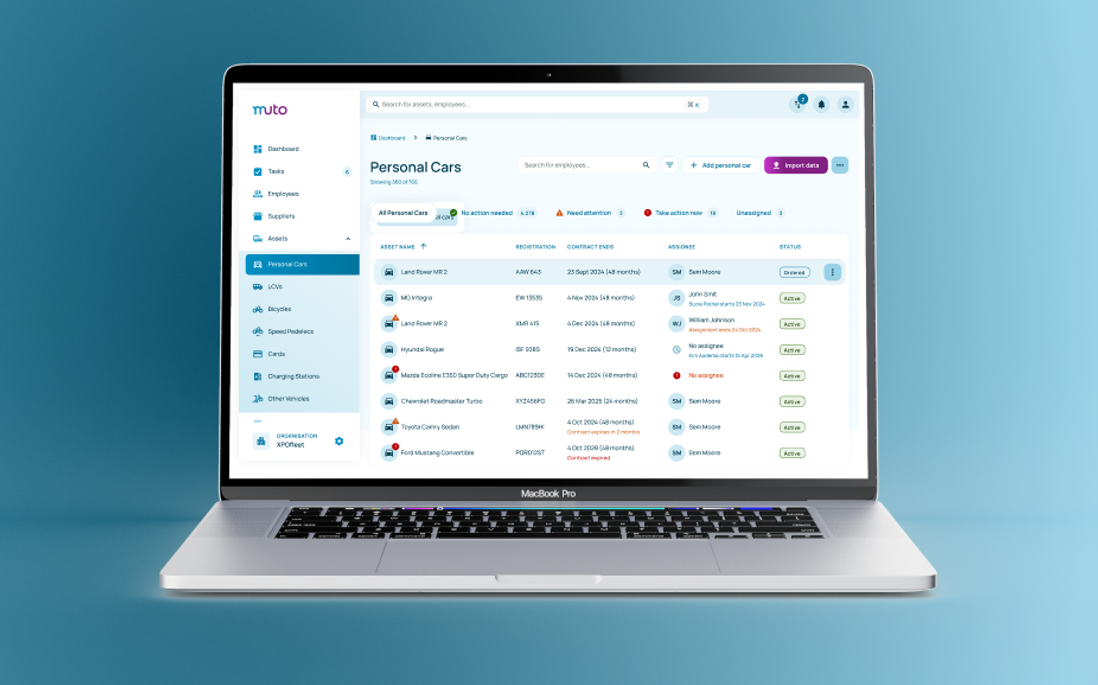
A unified mobility platform solves this by consolidating all data into a single place. This gives HR, finance and fleet teams a shared view of usage, costs and emissions.
Automation removes the administrative burden #
As mobility becomes more diverse, administrative workloads increase unless you automate processes. Manual validation of charging costs, commutes or budget transactions can quickly become overwhelming.
Automation takes over the repetitive tasks that slow mobility teams down. For instance, automate reimbursement of home-charging costs, validate mobility budget transactions against policy rules, and calculate TCO and CO2 impact without spreadsheets.
When these tasks happen on autopilot, HR and mobility teams can focus on strategy and employee support.
Data makes mobility a strategic business driver #
When mobility data is accurate, mobility shifts from an operational cost to a strategic advantage.
- HR can show how mobility supports attraction and retention.
- Finance can forecast mobility spending.
- Sustainability can perform ESG mobility reporting with confidence.
- Fleet managers can make better decisions around usage and charging.
Explore how mobility budgets affect TCO and how to calculate it in our latest series on TCO.
Quick wins to build a data-driven mobility program #
You can start small-scale and take even minor steps. That way, you're already closer to bringing more clarity than before.
- Centralise all mobility data in one place for HR, finance and fleet.
- Automate repetitive tasks, such as charging, reimbursement, and expense validation.
- Track TCO, usage and emissions to support better decisions.
- Ensure mobility data integrates seamlessly with payroll and HR systems.
- Use dashboards to explain mobility insights clearly to leadership.
Conclusion: the time to act for 2026 is now #
Mobility is no longer about moving people from A to B. It's a benefit that is increasingly becoming a talent tool and a strategic cost driver.
The companies that succeed in 2026 will be those that 1) personalise mobility, 2) balance flexibility with compliance, and 3) use data and automation to bring clarity to a complex landscape. These three mobility priorities are not long-term ambitions. They are practical steps you can start working on today to create a strong program. Such a program will support employees, meet regulatory requirements and set you apart from others for talent attraction.
To simplify compliance, personalise employee mobility benefits, and gain complete visibility over your fleet and budgets, you don't need more tools. Instead, you need one platform that brings everything together.
Muto helps HR, fleet and finance teams create a seamless, compliant and data-driven mobility strategy for 2026. Are you ready to build a mobility program your people will actually value? And a program that your company can rely on?


